In Part 1, I traced this pattern back to its roots — and I realized I had spent years handing other people the authority to decide whether I was allowed to feel joy. That recognition is where this week’s reflection begins.
The Missing Piece: Individuation
As I reflected on all of this a few weeks ago, I discovered a concept that suddenly gave language to everything I had experienced: individuation.
Individuation is the lifelong process of becoming your own person. It is learning to know yourself, to trust your own inner voice, to make decisions aligned with your values, to remain yourself even when people disagree with you. And just as importantly, it is allowing other people to do the same.
Healthy families encourage individuality. They don’t require everyone to think alike. They don’t confuse disagreement with disloyalty. They don’t expect everyone to process life the same way. They don’t require someone to become smaller in order to preserve connection. Instead, they create an environment where each person’s uniqueness is welcomed rather than feared.
Looking back, I don’t believe my family intentionally discouraged individuation. I think we simply didn’t recognize how easily love, wisdom, leadership, and peacemaking could unintentionally create dependence instead of personal ownership. The result was that I entered adulthood with a nervous system that had become extraordinarily skilled at reading everyone else’s emotions while remaining disconnected from my own authority.
That realization changed everything, because I finally understood something I had never understood before: healing isn’t simply learning how to identify unhealthy people. Healing is reclaiming the authority to become fully yourself.
And perhaps for the very first time in my life… I truly believe I am.
The Moment I Finally Chose Myself
A few weeks ago, I stopped asking a question I have unknowingly asked for most of my life: “How do I get them to understand me?” Instead, I found myself asking something entirely different: “Why am I giving someone else the authority to define my life?”
That single question changed everything.
For years, I believed building healthy relationships meant becoming better at explaining myself—becoming more patient, more understanding, more accommodating, more loving. Surely if people could just see my heart, everything would be okay.
A few weeks ago, I realized something that completely shifted my perspective. It isn’t my responsibility to convince someone else to recognize my worth. It is my responsibility to recognize it myself.
That doesn’t mean I no longer feel sadness when someone I love treats me poorly. It doesn’t mean rejection suddenly stops hurting. It doesn’t mean I approve of cruelty or disrespect. It simply means I no longer organize my emotional life around earning acceptance from people who are unwilling to truly know me.
I can acknowledge my hurt without making my happiness dependent on someone else’s opinion of me.
People absolutely have the right to disagree with me. They have the right to be disappointed with my choices. They have the right to see situations differently than I do. They even have the right to decide they no longer want a relationship with me. Those are their choices.
What they do not have is a moral right to be cruel, dismissive, or disrespectful simply because we disagree.
I cannot control whether someone chooses kindness. I cannot force someone to understand me. I cannot make another person respect me. But I also don’t have to put my life or my joy on hold while I wait for them to change.
Sometimes the healthiest response is to create distance. Healthy relationships are built on consistent kindness, mutual respect, and healthy boundaries. Not promises. Not temporary apologies. But consistent actions. Healthy relationships don’t require me to convince someone that I deserve respect. They simply require two people who have both chosen to practice it.
The way another person treats me may reveal something about them. How I choose to respond reveals who I am becoming.
Preparing My Own Feast
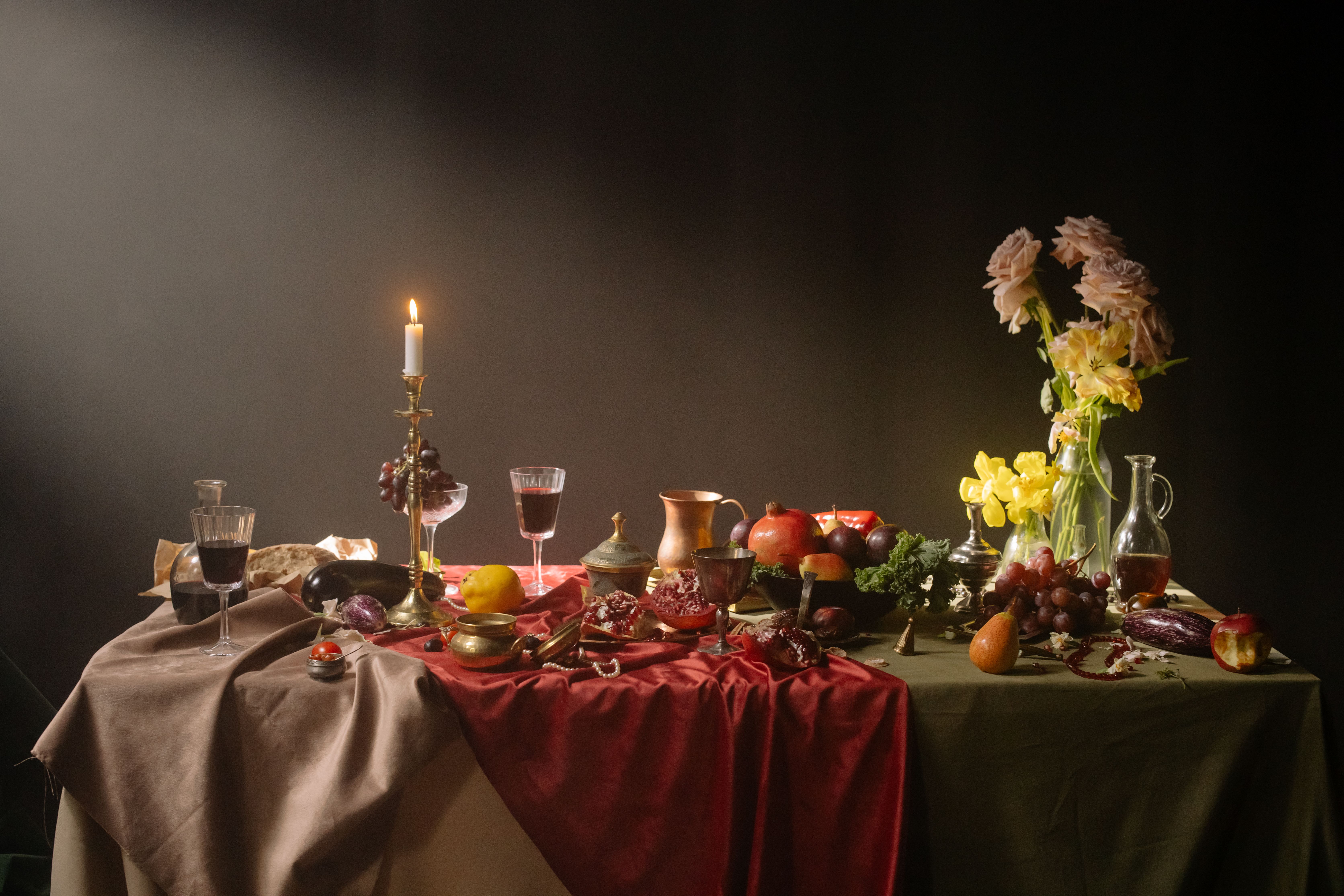
One of the metaphors that came to me around that time was this: for years, I accepted emotional crumbs because I was waiting for someone else to prepare a feast for me. Now, I am preparing my own feast.
When I first had that thought, I smiled. But then I asked myself a question: “What does preparing my own feast actually look like?”
The answer surprised me. Preparing my own feast means becoming the first person to offer myself the love I spent years hoping someone else would give me. It means looking in the mirror each morning and saying, “Good morning, darling.” Not because I think I’m perfect, but because I no longer want my own inner voice to become another place where I experience criticism.
Preparing my own feast means becoming selective with the way I speak to myself. If I wouldn’t want a healthy partner speaking to me that way… why would I allow myself to speak to me that way? It means replacing self-condemnation with curiosity, shame with compassion, harshness with gentleness. Because something remarkable happens when your own inner voice becomes kind: you become much quicker at recognizing when someone else’s voice is not.
When respect becomes the atmosphere inside of you… disrespect becomes impossible to ignore.
Preparing my own feast means trusting myself with my decisions—not because I will always make perfect choices, but because I finally believe my own life belongs to me. It means taking myself for a walk because my body wants to be outside instead of waiting for someone else to join me. It means buying another galaxy lamp because I discovered how deeply peace nourishes my nervous system instead of waiting for someone else to create a peaceful evening. It means making nourishing meals because my body deserves to be cared for. It means resting when I am tired instead of believing I have to earn rest. It means celebrating my progress, comforting myself when I hurt, cheering for myself when I grow, treating myself the way I hope a healthy partner will one day treat me.
Ironically, the more I do that, the easier it becomes to recognize relationships that don’t reflect those same values. Because love is no longer something I beg for. Love becomes something I already know.
And when someone enters my life, they are no longer filling an empty table. They are joining one that is already beautifully set.
The Gift Hidden Inside the Pain
One of the greatest tragedies of my life wasn’t simply that I experienced unhealthy relationships. It was that I believed the answer was becoming better at adapting.
Now I believe the opposite: healing and building healthy relationships aren’t about becoming better at pleasing people. They’re about becoming fully yourself.
Not everyone will celebrate that. Some people become uncomfortable when you stop organizing your life around their expectations. Others may misunderstand your boundaries. Some relationships may even end. That is painful. But I no longer believe my joy has to wait until everyone approves of me.
My responsibility is not to spend my life chasing acceptance or proving my worth. My responsibility is to live this beautiful, precious life fully—to nurture my own heart, to protect my peace, to continue growing, to laugh, to dream, to create, to love, to experience wonder, to build a life that reflects who I truly am instead of who other people need me to be.
For the first time in my life, I understand that my happiness is not something other people grant me. It is something I choose to cultivate every single day. And perhaps that is the greatest gift individuation has given me.
Not independence from love. I still deeply love people. I still hope for beautiful, healthy relationships. I still believe we were created for connection. But I no longer believe I have to abandon myself in order to belong.
Because the most important relationship I will ever build… is the one I have with myself.
And from that place, something extraordinary happens. I stop accepting crumbs because I have learned how to prepare a feast. I stop begging for permission because I have discovered that my life was never waiting for someone else to authorize it. It was waiting for me.
Today, when I look in the mirror and whisper, “Good morning, darling,” I’m not speaking to the woman I hope to become someday. I’m finally speaking to the woman who was there all along. The one I had spent a lifetime searching for.
And at long last… I’ve come home.